
F-1 to H-1B Change of Status (COS): The Complete Guide for Students in the U.S.
Question not answered yet? We are here to help! Get in touch and ask us anything.


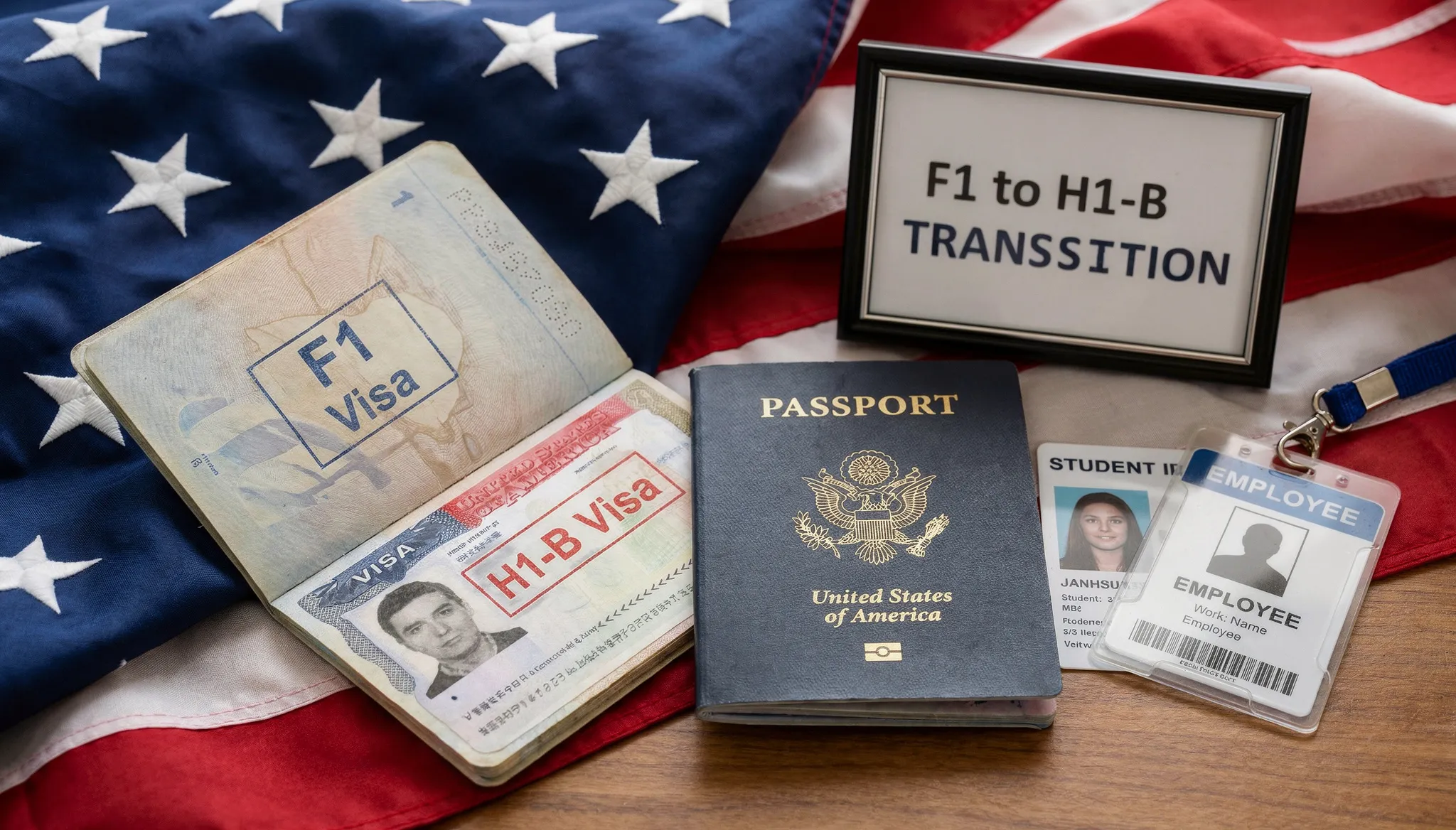
Introduction: The F-1 to H-1B Confusion (and the $100K Myth)
Each year, thousands of international students in the United States search for answers about transitioning from F-1 student status to H-1B work visa status. One topic dominates online discussions:
“Does it really cost $100,000 to go from F-1 to H-1B?”
The short answer is no, not when the H-1B petition is filed inside the United States as a Change of Status (COS).
This article provides a clear, legally accurate, and up-to-date explanation of the F-1 to H-1B Change of Status process, including eligibility, timelines, costs, risks, and how an experienced immigration law firm like Kulen Law Firm can guide you through the process.
Watch NYC immigration attorney Remzi G. Kulen explain who can change immigration status from inside the United States, the most common change of status scenarios, and the mistakes that force people to leave the country:
What Is a Change of Status (COS)?
A Change of Status (COS) is a USCIS procedure that allows a non-immigrant in the U.S. to change from one visa classification to another without leaving the country.
For F-1 students, this means:
- You remain physically in the U.S.
- You do not attend a visa interview abroad
- Your status changes automatically upon H-1B approval
F-1 → H-1B COS is the most common and preferred method for students who are already in lawful status in the U.S.
F-1 to H-1B Change of Status: Step-by-Step Overview
1. Valid F-1 Status at Time of Filing
To qualify for COS, you must:
- Be in valid F-1 status or
- Be in an authorized F-1 grace period or
- Be on approved OPT or STEM OPT
Maintaining status is critical. Even short gaps can create legal risks.
2. Employer Sponsorship
H-1B is an employer-sponsored visa. The employer must:
- Offer a specialty occupation
- Pay the prevailing wage
- File an H-1B petition with USCIS
The student cannot self-petition.
3. H-1B Registration & Lottery (If Subject)
Most applicants are subject to the annual H-1B cap:
- Registration typically occurs in March
- Selection is randomized
- Petition filing follows selection
(Some employers and roles are cap-exempt.)
4. Filing the H-1B Petition with COS
The employer files Form I-129 requesting:
- H-1B classification
- Change of Status from F-1 to H-1B
This is the key moment where the $100K myth breaks down.
The $100,000 H-1B Fee Myth Explained
Where Did the $100K Number Come From?
The figure often comes from misinterpreted legislation, consulting rumors, or offshore outsourcing cases. In reality:
- There is no $100,000 USCIS fee for F-1 to H-1B COS
- There is no special tax on students changing status
- USCIS filing fees are fixed and published
When the $100K Does Not Apply
✅ F-1 to H-1B filed inside the U.S. as Change of Status
✅ Extension of H-1B status petitions
✅ When students on OPT or STEM OPT files an H1B Change of Status in the US
When High Costs May Exist (Different Scenario)
❌ Consular processing abroad
❌ Third-party staffing models
❌ Non-compliant labor arrangements
These scenarios are not typical F-1 to H-1B COS cases.
Real F-1 to H-1B Costs (What Actually Applies)
Typical cost categories include:
- USCIS filing fees (paid by employer)
- Attorney legal fees
- Optional premium processing
There is no USCIS fee anywhere near $100,000 for COS filings.
⚠️ Students should be cautious of:
- “Guaranteed H-1B” promises
- Offshore consultancy arrangements
- Requests for illegal fee reimbursement
F-1 to H-1B COS Timeline
Standard Timeline
- March: H-1B registration
- April–June: Petition filing
- Oct 1: H-1B start date
Cap-Gap Protection
If your OPT expires before October 1, Cap-Gap may allow you to:
- Continue working
- Remain in lawful status
This must be properly documented.
Common Risks in F-1 to H-1B Change of Status
1. Status Gaps
Unlawful presence can occur if:
- OPT expires too early
- COS is denied
- Employment authorization lapses
2. Employer Compliance Issues
Even a strong candidate can be denied if the employer:
- Misclassifies the role
- Fails wage requirements
- Submits weak documentation
3. Travel During COS
Leaving the U.S. while COS is pending can abandon the request.
Legal guidance is essential.
Can You Travel During F-1 to H-1B COS?
In most cases:
❌ Travel is not recommended while COS is pending
✅ Travel may be possible after approval, with proper documentation
Each case must be evaluated individually.
Why Work With a Change of Status Lawyer?
F-1 to H-1B is not just paperwork, it is status management.
An experienced immigration lawyer helps:
- Assess COS eligibility
- Coordinate with employers
- Prevent status violations
- Avoid RFEs and denials
- Plan fallback strategies
How Kulen Law Firm Helps with F-1 to H-1B COS
Kulen Law Firm is a U.S.-based immigration law firm with deep experience in:
- F-1 to H-1B Change of Status
- OPT & STEM OPT transitions
- Cap-Gap planning
- Employer compliance
- Complex USCIS filings
What Sets Kulen Law Apart
- Attorney-led case strategy
- Clear cost transparency
- Risk-focused planning
- Employer + employee coordination
- Nationwide representation
Change of Status Lawyer
https://www.kulenlawfirm.com/change-of-status-lawyer
Final Thoughts: Clarity Beats Fear
The F-1 to H-1B process is often surrounded by misinformation, especially around cost. When handled correctly:
- Change of Status is lawful
- The $100K fee does not apply
- Students can transition smoothly
What matters most is timing, compliance, and legal strategy.
If you are planning your F-1 to H-1B Change of Status, working with an experienced immigration attorney can make the difference between approval and unnecessary risk.
Speak with a Change of Status Lawyer
https://www.kulenlawfirm.com/change-of-status-lawyer
Frequently Asked Questions
Does the $100,000 H-1B fee apply to F-1 to H-1B Change of Status?
No. The widely discussed “$100K H-1B fee” does not apply to F-1 to H-1B petitions filed inside the United States as a Change of Status (COS). Standard USCIS filing fees apply instead.
Can I change status from F-1 to H-1B without leaving the U.S.?
Yes. If you are in valid F-1 status (including OPT or STEM OPT), you may request a Change of Status and remain in the U.S. without consular processing.
What happens if my OPT expires before October 1?
You may qualify for Cap-Gap protection, which can extend your F-1 status (and in many cases work authorization) until the H-1B start date, provided the H-1B was properly filed.
Is premium processing available for F-1 to H-1B COS?
Yes. Premium processing may be requested by the employer and can significantly shorten USCIS decision times. However, it does not guarantee approval.
Can I travel internationally while my F-1 to H-1B COS is pending?
In most cases, travel is not recommended. Departing the U.S. while a COS request is pending may be treated as abandonment of the change of status portion of the petition.
What if my F-1 to H-1B Change of Status is denied?
If denied, your lawful status may end immediately unless you have another valid status or grace period. Immediate legal guidance is critical to avoid unlawful presence.
Can I go from F-1 to H-1B if I am in my 60-day grace period?
Possibly. Timing is extremely sensitive. Whether COS is viable depends on when the H-1B petition is filed and whether you are still considered in lawful status.
Do I need to pay H-1B fees myself as an F-1 student?
Certain H-1B fees must legally be paid by the employer. Students should be cautious of arrangements requiring reimbursement that may violate labor or immigration regulations.
Is F-1 to H-1B Change of Status safer than consular processing?
For many applicants, yes. COS avoids travel risks, visa appointment delays, and re-entry uncertainty. However, not every case is suitable for COS.
How long does F-1 to H-1B Change of Status take?
Processing time varies based on USCIS workload, service center, and whether premium processing is used. Strategic filing and documentation can reduce delays and RFEs.
Can I switch employers after F-1 to H-1B approval?
Yes, but only after H-1B status becomes effective and through a properly filed H-1B transfer. Timing errors can jeopardize status.
Does F-1 to H-1B COS affect future green card options?
No. A properly handled F-1 to H-1B transition preserves future immigrant options such as PERM, EB-2, or EB-1, assuming continued compliance.
Why should I work with a Change of Status lawyer?
Because COS cases involve status timing, employer compliance, and future immigration strategy. Small mistakes can have irreversible consequences.
Related: read our complete H-1B visa guide, or speak with an experienced H-1B visa lawyer at Kulen Law Firm.